
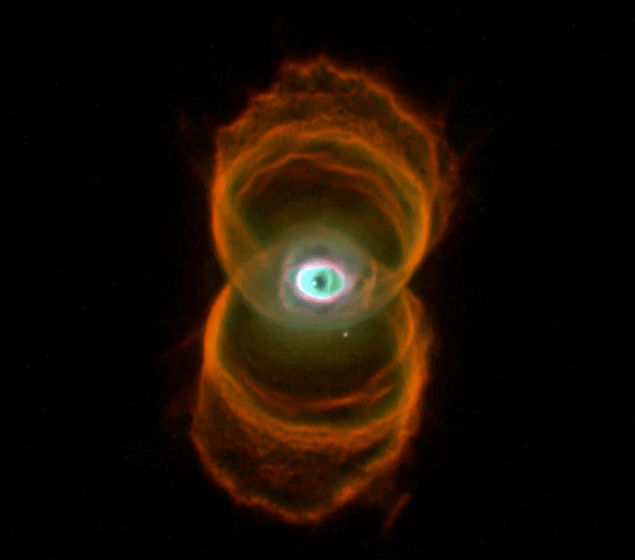
The Engraved Hourglass Nebula, with its striking resemblance to a watchful eye peering across the vast expanse of space, has captivated the human imagination. This young planetary nebula, located approximately 8,000 light-years from Earth, has even sparked religious interpretations, drawing parallels to the concept of a divine observer. Some see it as a literal “Eye of God,” a celestial embodiment of the all-seeing presence mentioned in various religious texts. This interpretation connects to biblical verses that speak of God’s omniscience, such as Psalm 33:13-14 and Proverbs 15:3, which emphasize God’s constant observation of creation. The nebula’s hourglass shape has also been linked to notions of time and eternity, further fueling its spiritual significance. But does this cosmic gaze extend beyond symbolic interpretation? Could the pervasive human feeling of being watched have deeper roots, intertwined with our evolutionary past or even a history of interaction with a creator or overseer?
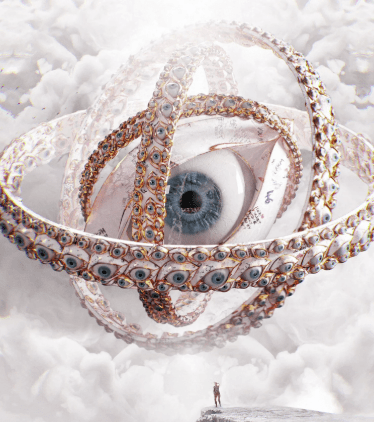
This profound question delves into the intersection of psychology, evolution, and potentially even spirituality. Let’s explore the possibilities:
1. The Evolutionary Explanation:
The feeling of being watched is a common human experience, and evolutionary psychology offers compelling explanations for its prevalence:
- Survival Instinct: In our ancestral environment, being observed often signaled danger. Predators stalked their prey, and social interactions within early human groups involved constant observation and judgment. Individuals more attuned to these subtle cues were more likely to survive and reproduce, passing on their heightened vigilance to subsequent generations.
- Social Cohesion: The feeling of being watched also plays a crucial role in maintaining social order. Knowing that others might be observing us encourages conformity to social norms and fosters cooperation within groups. This social pressure is essential for the functioning of complex societies and has likely been a significant factor in human evolution.
- Gaze Detection: Humans possess an exceptional ability to detect the gaze of others, even in peripheral vision. This sensitivity is linked to specific neural pathways in the brain, allowing us to quickly assess potential threats or social cues. This heightened awareness can sometimes trigger the feeling of being watched even when no one is actually present, a lingering echo of our evolutionary past.
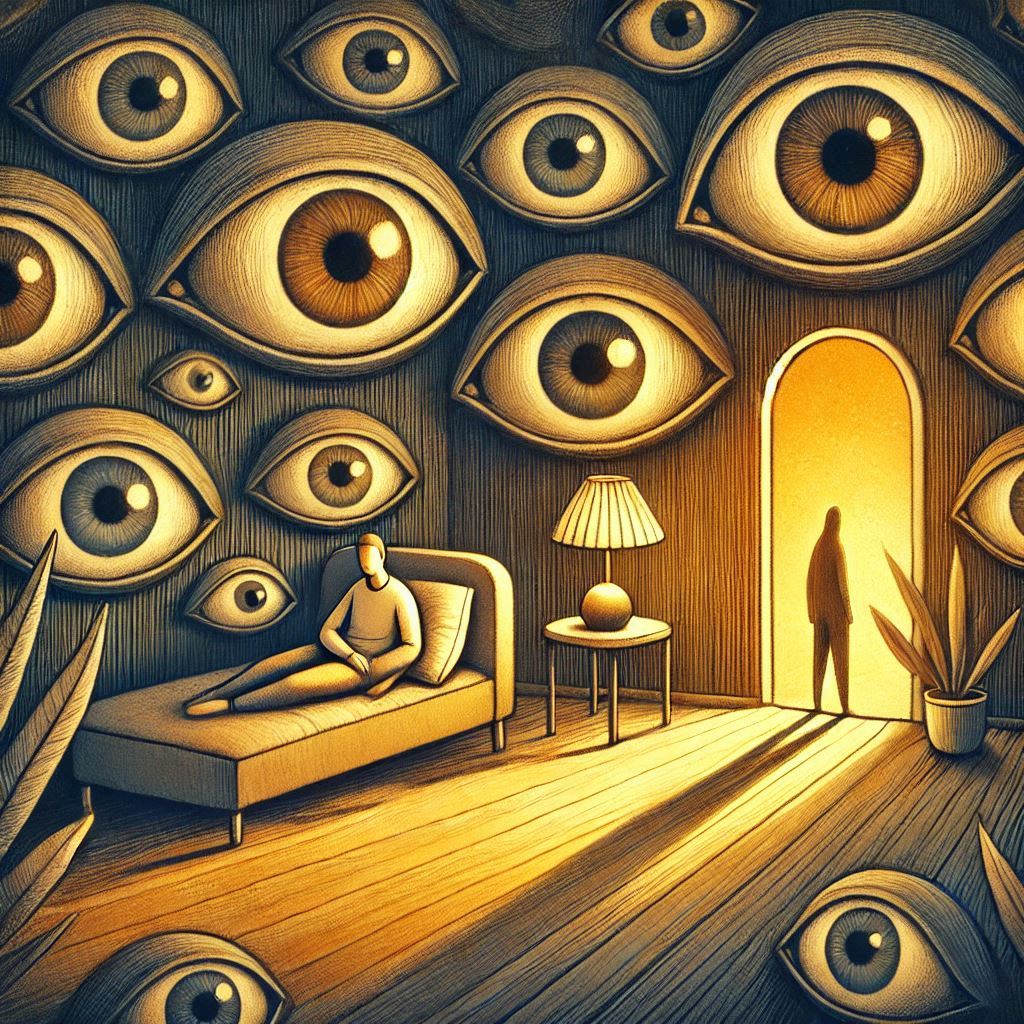
2. The “Creator” or “Overseer” Hypothesis:
Beyond evolutionary explanations, some theories propose that the feeling of being watched could stem from a history of interaction with a creator or overseer:
- Ancient Astronaut Theories: These theories posit that extraterrestrial beings visited Earth in the distant past and influenced human development. These beings were often perceived as gods or creators by ancient civilizations. If such interactions occurred, the feeling of being watched could be a psychological remnant of this past oversight.
- Spiritual or Religious Beliefs: Many religions and spiritual traditions emphasize the existence of a higher power or spiritual entities that observe human actions. This deeply ingrained belief, even among those who are not actively religious, can contribute to a pervasive sense of being watched, as these ideas are often embedded within cultural consciousness.
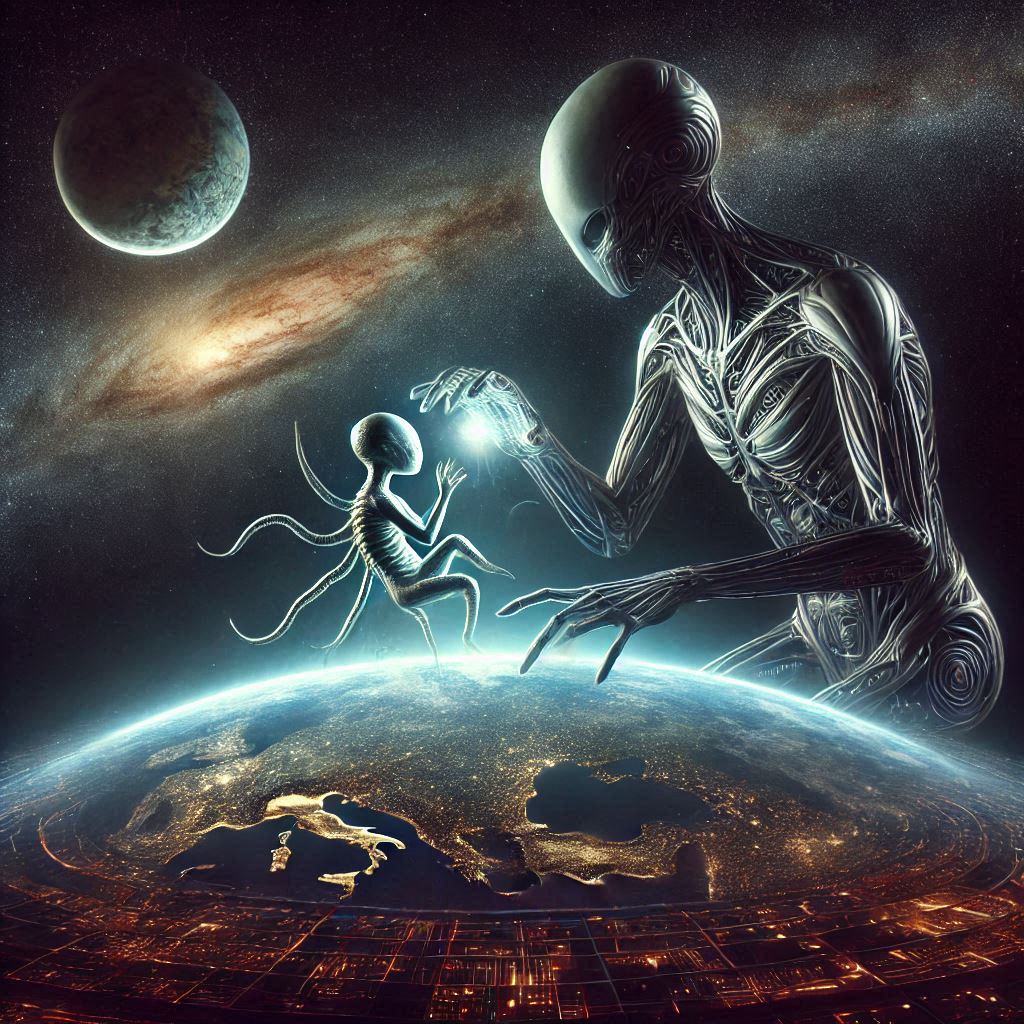
Addressing the Impact on Evolution:
The possibility of past interaction with a creator or overseer raises the question of its impact on human evolution:
- Guidance vs. Interference: It’s plausible that any past interaction was more akin to guidance or providing an initial impetus for development rather than direct control. This would allow for natural evolutionary processes to continue while acknowledging an external influence.
- Adaptation and Learning: Regardless of any past oversight, humans still faced the constant challenge of adapting to their environment and learning to survive. This process of adaptation and learning would have been a primary driver of evolution, even with external influence.
- The Unknown: The existence of a creator or past oversight remains a matter of faith and interpretation. Science cannot definitively prove or disprove these possibilities.
In Conclusion:
The feeling of being watched is a complex phenomenon with likely roots in our evolutionary past, serving as a crucial survival mechanism and promoting social cohesion. However, it’s also possible that this feeling is influenced by deeper cultural, spiritual, or even potentially historical factors related to beliefs in a creator or interactions with advanced beings. Whether such oversight guided or hindered our independent evolution remains a complex and open question, a fascinating intersection of science, spirituality, and the enduring mystery of human existence.
Resources:
Deep Space by Audionautix is licensed under a Creative Commons Attribution 4.0 license. https://creativecommons.org/licenses/by/4.0/
Artist: http://audionautix.com/
 Aguilar Productions